How your heart pumps blood
One loop of blood traced through four chambers, four valves and two separate circuits, from the tissues that used it up to the capillaries that feed them again.
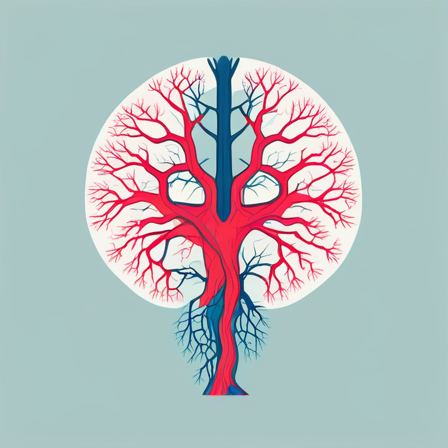
Your body's tissues
Right now every cell in you is burning oxygen and tipping waste into the blood around it. That blood turns a dark purple red, drained of what it carried, and it has one job left, to get back to the heart and be refilled.
The veins, your reservoir
Veins are not just pipes, they are storage. At any moment about two thirds of your five litres of blood is sitting inside them, and because the pressure there is so low, it is the squeeze of your leg muscles that pushes it uphill.
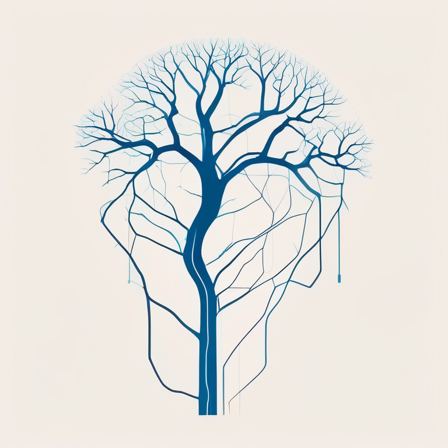
Right atrium fills
The blood arrives in the right atrium, the heart's waiting room. This thin walled chamber fills quietly, then gives one gentle squeeze that tops up the chamber below with the final fifth of its load. Most of the filling needs no push at all.
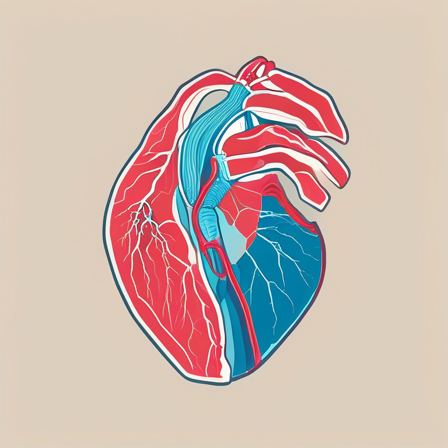
The tricuspid valve opens
Between the two right chambers sits the tricuspid valve, three flaps of tissue tethered by fine cords like the lines of a parachute. Those cords are what stop the flaps blowing inside out when the pressure underneath suddenly spikes.
Right ventricle squeezes
Now the right ventricle contracts. It only has to move blood as far as your lungs, a few centimetres away, so its wall is thin and it generates roughly a fifth of the pressure the other side does. This chamber is weak by design.
Out the pulmonary artery
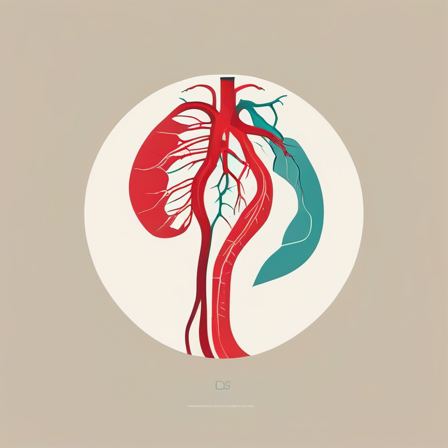
This is the only artery in a grown body that carries oxygen poor blood, which is where the textbook rule about arteries breaks down. It leaves the heart and immediately splits, one branch per lung, and your entire five litres passes through about once a minute.
The lungs
In the lungs the blood fans out into vessels so fine the red cells travel nose to tail. In well under a second they hand over carbon dioxide, take on oxygen, and change colour from dark maroon to bright scarlet.

Pulmonary veins bring it home
Four pulmonary veins carry it home, and they are the only veins in you filled with fresh oxygen rich blood. That single exception catches out almost everyone who was taught that arteries carry the good stuff and veins carry the stale.
Left atrium fills
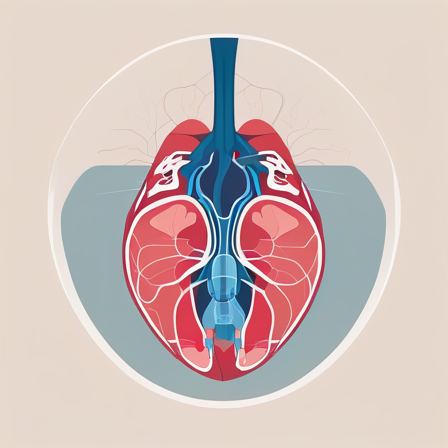
The left atrium takes delivery at the very back of the heart, pressed so close against the oesophagus that a probe swallowed down the throat gives doctors their clearest view of it. It fills at the same instant as its twin on the right, because the two sides beat as one machine.
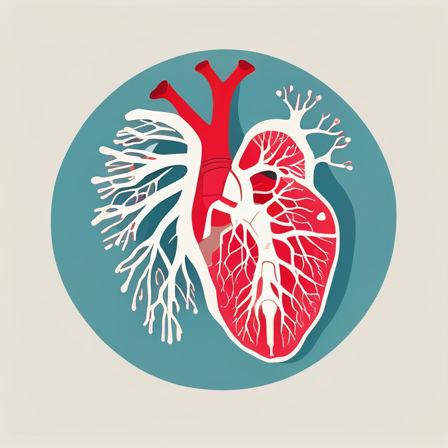
The mitral valve opens
The mitral valve has only two flaps, and it is named after the pointed hat a bishop wears. It opens and shuts around a hundred thousand times a day, and its snap closed is the first of the two sounds you hear in a heartbeat.
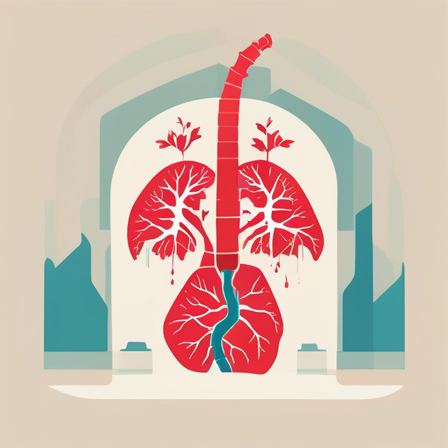
Left ventricle, the engine
This is the engine. Its muscular wall is about three times thicker than the right side, because it has to drive blood to your toes and your brain in a single stroke. It wrings itself out with a twist, like squeezing a wet towel.
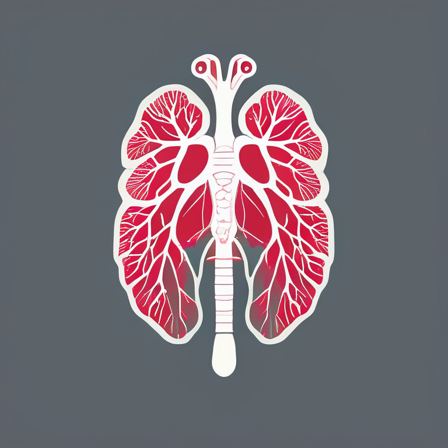
Out through the aorta
Blood leaves through the aorta, a pipe as wide as a garden hose, at roughly one and a half metres a second. Its wall is elastic, so it balloons with every beat and springs back between them, smoothing a violent pulse into steady flow.
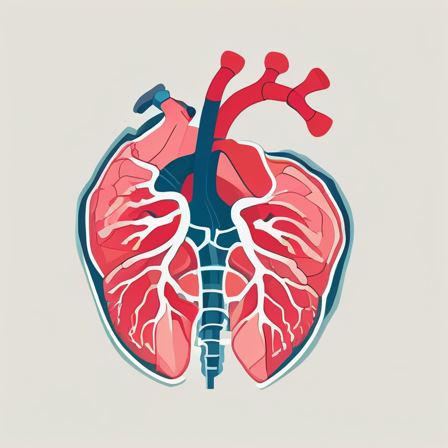
Capillaries feed every cell
The aorta divides and divides again until the blood is in capillaries thinner than a hair. You carry enough of them to wrap around the Earth twice over, and no cell in your body sits more than a few cell widths from one.
The sinus node keeps time
None of this waits for your brain. A patch of cells called the sinus node fires on its own about seventy times a minute, and both circuits, the short one to your lungs and the long one to your body, run in lockstep from that single spark.
Watch it explain itself
Every step above is narrated aloud. Play it, or open it in the editor and make it yours — no account needed.