The six simple machines
Lever, wheel and axle, pulley, ramp, wedge and screw — the six shapes that trade distance for strength, the bargain behind mechanical advantage, and where all six are hiding in your kitchen.
Simple machines
A simple machine has no motor, no fuel and no moving parts you could call clever. It is just a shape that changes how a force works, and there are only six of them. Every crane, engine and bicycle ever built is those six in combination.
Work is force times distance
Here is the catch nobody mentions. Work equals force multiplied by distance, and no machine can create work out of nothing. If a ramp halves the push you need, it makes you push twice as far. You trade distance for strength, never for less effort overall.
The lever
A lever is a stiff bar that turns on a pivot. Push down far from the pivot and you lift a heavy load close to it. Archimedes was not joking when he said that, given a long enough lever and somewhere to stand, he could move the Earth.
Fulcrum, effort and load
Where you put the pivot changes everything. A seesaw has the pivot in the middle, a wheelbarrow puts the load in the middle, and your own forearm puts the effort in the middle, which costs you strength but buys your hand a lot of speed.

The wheel and axle
A wheel and axle is really a lever that keeps going round. A wide steering wheel turning a thin shaft multiplies your grip many times over, and because a rolling wheel never scrapes along the ground, it wipes out most of the friction of dragging something.
The pulley
A pulley changes the direction of your pull, so you can haul downwards instead of lifting upwards. Add a second moving pulley and the rope carries half the load on each side. A crane block threaded with six lines lets a motor lift six times what it should.
The inclined plane
A ramp is a machine even though nothing inside it moves. Lifting a barrel two metres straight up is brutal. Rolling it up a ten metre slope to exactly the same height needs about a fifth of the force, and every wheelchair ramp is that bargain poured in concrete.
The wedge
A wedge is an inclined plane you drive into things rather than climb. It turns a push forwards into an enormous shove sideways. Your front teeth, an axe head, a nail and a zip are all wedges, and the longer and thinner the wedge, the less force it demands.
The screw
Unwrap the thread of a screw and you get a long thin ramp wound round a cylinder. That is why many turns move a screw forward barely at all, and why a car jack that lifts a whole tonne can be worked comfortably with two fingers.
Mechanical advantage
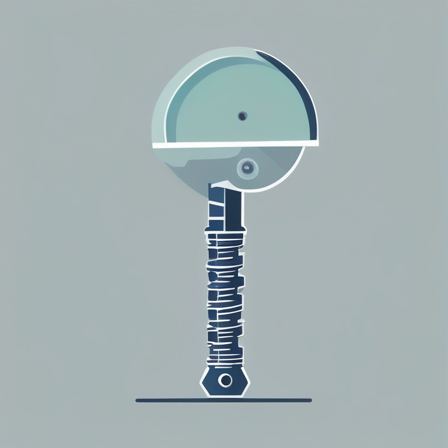
Mechanical advantage is simply the load divided by your effort. A crowbar might give you ten, meaning ten kilograms lift for every kilogram you push down. Work that number out and you know in advance exactly how much easier a machine is going to make your day.
Friction takes its cut
No real machine reaches its promised number. Friction and bending steal part of every push, often five to twenty in every hundred, and that stolen energy leaves as heat. It is why a rope over a rusty pulley feels stiff and why machines grow warm when they work hard.
Compound machines
Bolt simple machines together and you get a compound machine. Scissors are two levers carrying two wedges. Nail clippers stack three levers in a row. Nothing new is ever invented at this point, the same six ideas just get attached to one another.
A bicycle
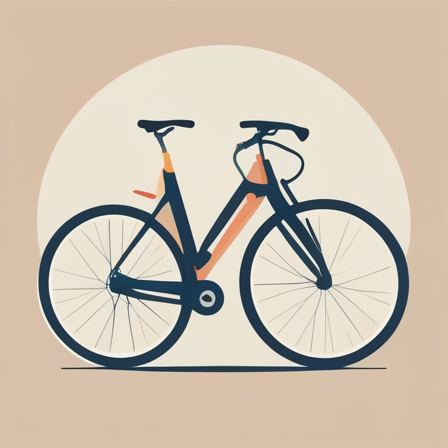
A bicycle is the champion of the lot. Levers in the pedals and brakes, wheels and axles at both ends, screws holding the seat, and wedge shaped teeth on the gears. It carries a person further on a bowl of porridge than any animal or machine on Earth.
Machines inside you
Your skeleton is a box of levers. Elbow, jaw and ankle each pivot on a joint while a muscle pulls close to that pivot, trading strength for speed. Your calf muscle heaves with several times your body weight just so your toes can flick you forward at a run.
Six machines in one kitchen
Look around a kitchen and count them off. Knife and grater are wedges, jar lids and bottle tops are screws, a door handle is a wheel and axle, a bottle opener is a lever, a blind cord runs over a pulley, and a chopping board tilted to pour is a ramp.
Watch it explain itself
Every step above is narrated aloud. Play it, or open it in the editor and make it yours — no account needed.