Parts of a plant
Roots, stem, leaves, flower, fruit and seed — every part of a plant and the job it actually does, narrated from the soil all the way up to the next generation.
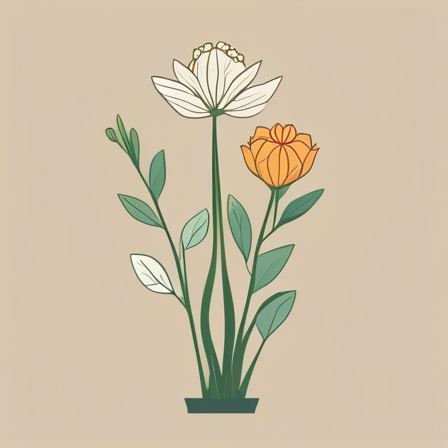
A flowering plant
A plant looks like one single thing, but it is really a team. Roots, stem, leaves, flower, fruit and seed each do a completely different job, and more than three hundred thousand kinds of flowering plant are all built from that same short list of parts.
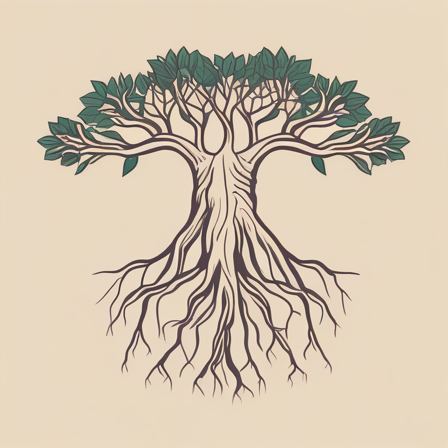
Roots
Roots do two things at the same time. They grip the soil so wind cannot topple the plant over, and they drink. The roots of one rye plant, laid end to end, would stretch for over six hundred kilometres.
Root hairs
The actual drinking is done by root hairs, each one a single cell stretched into a thread far thinner than one of your own hairs. They give the root a huge surface, and they are why yanking a plant out so often kills it.
The stem
The stem is the plant's tower and its plumbing rolled into one. It lifts the leaves into the light before the neighbours can get there, and it carries everything travelling between the roots and the leaves. Some bamboo stems climb nearly a metre in a single day.
Xylem tubes
Xylem tubes carry water upward in one long unbroken thread. There is no pump anywhere in a plant. Water evaporating from the leaves at the very top pulls the whole column up, sometimes a hundred metres in a tall tree.
Phloem tubes
Phloem tubes run the other way, carrying sugary sap made in the leaves down to the roots and out to every growing tip. The sap is under such pressure that when an aphid taps a single tube, it does not need to suck at all. The plant pushes its own sugar straight through the insect.
Leaves
A leaf is a solar panel, spread flat and thin so that light reaches almost every cell inside. Green chlorophyll catches the sunlight and builds sugar out of water and air, and a full grown oak tree runs about two hundred thousand of these panels at once.

Stomata
Turn a leaf over and the underside is covered in thousands of tiny mouths called stomata, far too small to see. They open to let carbon dioxide in, then shut on a hot day so the plant does not dry out.
The flower
The flower is the whole reason the plant bothered growing. It is a device for getting pollen from one plant onto another, because plants cannot walk off to find a partner and have to persuade something else to carry it for them.
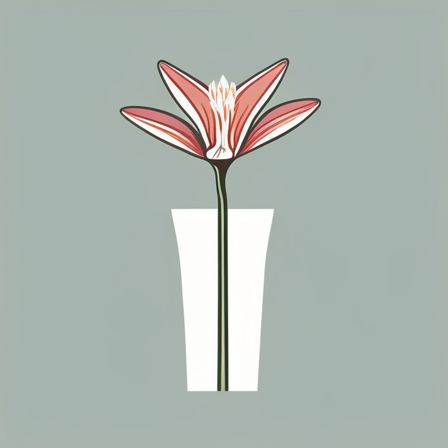
Petals
Petals are billboards. Their colour and their scent are aimed at bees and butterflies, and many petals carry stripes that we cannot even see, because bees see ultraviolet light and those hidden stripes point straight at the nectar.
Stamen
The stamen is the male part, a slender stalk topped with a dusty head that manufactures pollen. A single flower can release millions of grains, and each grain carries half the instructions needed to build a whole new plant.
Pistil
The pistil is the female part standing in the middle. Its tip is deliberately sticky so that arriving pollen grains stay put, and at its base sits the ovary, holding the tiny eggs that are waiting to become seeds.
Pollination
When a bee brushes past, pollen catches on its fur and rides to the next flower. The grain then grows a microscopic tube down through the pistil to reach an egg, and that meeting is fertilisation. It can take hours or days.
Fruit
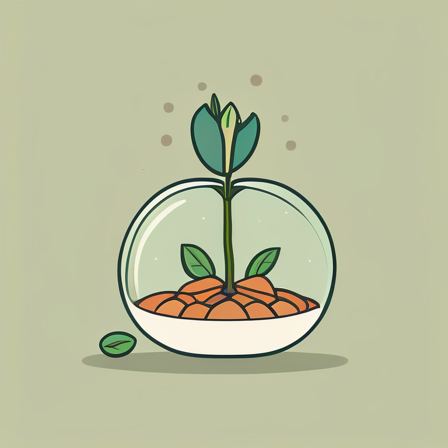
Once an egg is fertilised the ovary swells and becomes fruit. An apple, a tomato, a pea pod and an acorn are all fruit, and every one of them is really just a lunchbox built around a seed.
Seeds
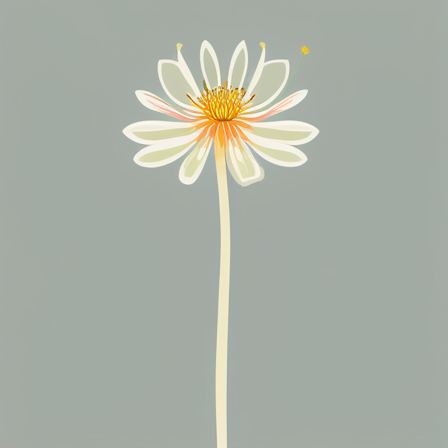
Inside the seed is a baby plant with its own packed lunch, sealed up and able to wait. Some seeds have sprouted after two thousand years. One date palm was grown from a seed found in the ruins of an ancient desert fortress.
And it starts again
So the plant ends exactly where it started. A seed lands somewhere, roots push down, a stem pushes up, leaves catch the light, and a flower opens to do the whole thing over again the following year.
Watch it explain itself
Every step above is narrated aloud. Play it, or open it in the editor and make it yours — no account needed.