Layers of the Earth
From the thin rock under your feet to a ball of solid iron as hot as the Sun's surface — every layer of the planet, with real depths, temperatures and how anyone found out.
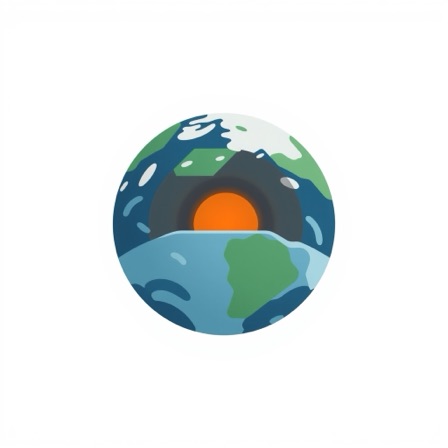
Planet Earth
You are standing on the thin skin of a very hot ball. It is six thousand three hundred and seventy one kilometres from your shoes to the centre of the Earth, and every layer on the way down gets hotter, denser and stranger.
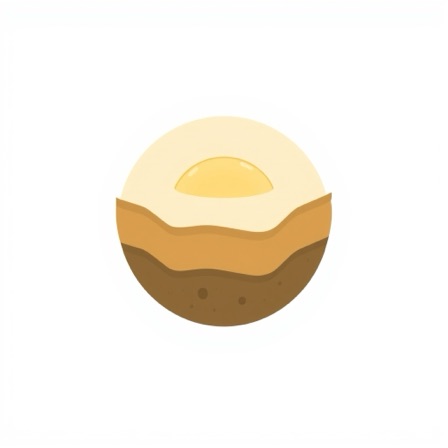
The crust
The crust is the only layer anyone has ever touched. It runs from about five to seventy kilometres thick, which sounds enormous until you scale it: in proportion, the crust is thinner than the skin on an apple.
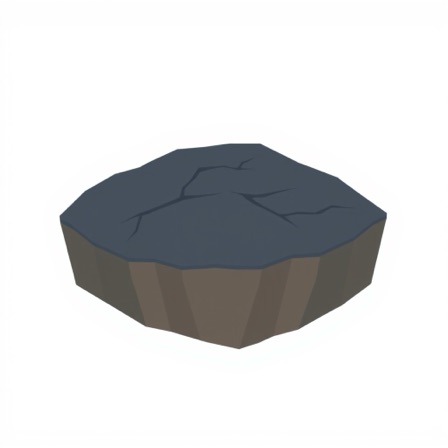
Oceanic crust
Oceanic crust is young, dark basalt, only around seven kilometres thick, and almost none of it is older than two hundred million years. It is constantly made fresh at mid ocean ridges and swallowed back down at deep trenches.
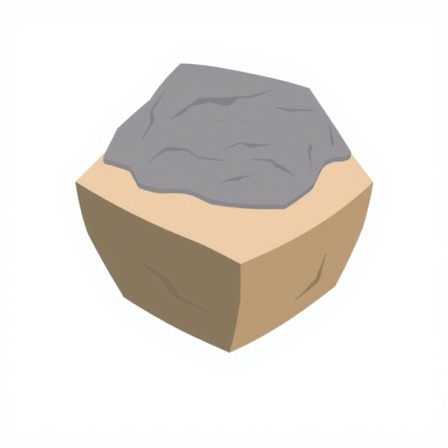
Continental crust
Continental crust is granite. It is lighter and far thicker, reaching seventy kilometres under the Himalayas. Because it floats high and refuses to sink, some of it has survived four billion years, nearly as long as the planet itself.
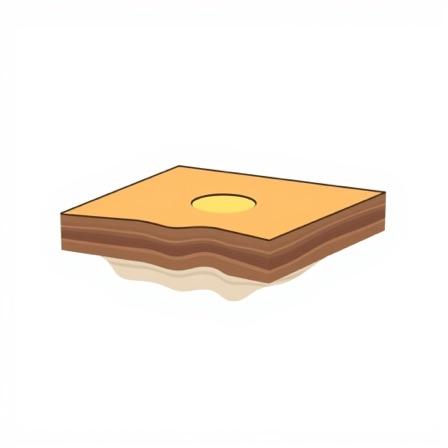
The Moho boundary
In nineteen hundred and nine a Croatian scientist noticed that earthquake waves suddenly sped up at a particular depth. That jump marks the Mohorovicic discontinuity, the sharp floor where crust stops and mantle starts, and nobody has ever drilled through it.
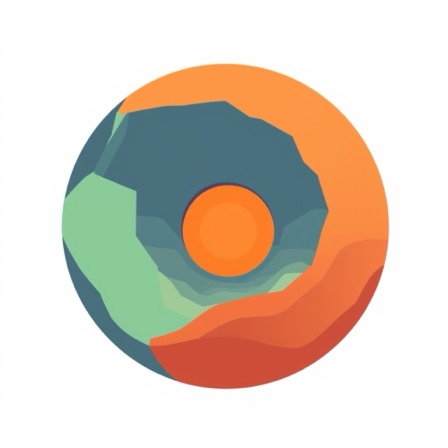
The mantle
The mantle is the main event: nearly two thousand nine hundred kilometres of hot silicate rock making up about eighty four percent of the planet's volume. It is genuinely solid, yet over millions of years it flows like extremely thick treacle.
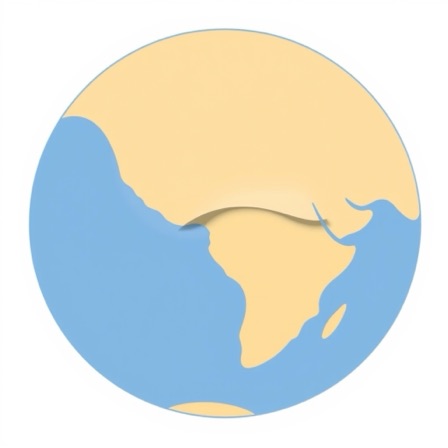
The lithosphere
The crust and the cold top of the mantle are welded into one rigid shell called the lithosphere. That shell is cracked into the tectonic plates that carry the continents around at roughly the speed your fingernails grow.
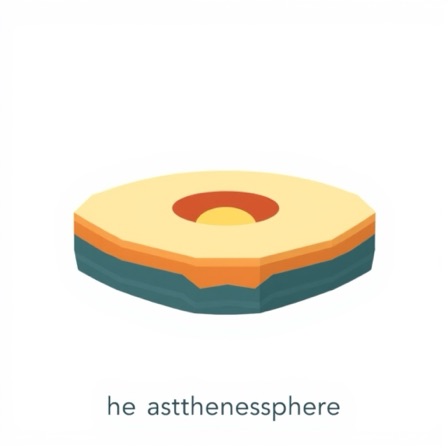
The asthenosphere
Below it sits the asthenosphere, weak, partly molten rock about a hundred kilometres down. It is soft enough for the plates above to slide over, and that softness is the whole reason Earth has drifting continents when other rocky planets do not.

The lower mantle
Deeper still, crushing pressure repacks the minerals into denser forms and the lower mantle becomes stiff again. It is already past two thousand degrees where this layer begins, and it reaches about three thousand seven hundred degrees where the mantle finally meets the core.
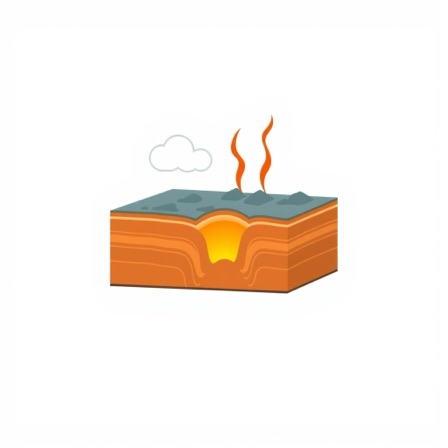
Convection currents
Heat leaking out of the core drives slow convection. Hot rock rises, cools, and sinks again in loops that take hundreds of millions of years to turn once. Those loops are the engine behind every earthquake, every volcano and every mountain range.
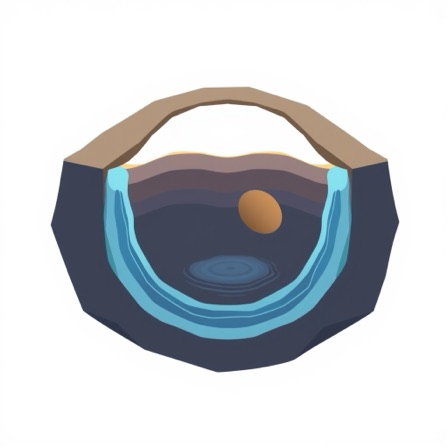
The outer core
At two thousand nine hundred kilometres down, rock gives way to a real ocean of liquid iron and nickel, over two thousand kilometres deep and around four thousand degrees. We know it is liquid because one type of earthquake wave stops dead at its edge.
The magnetic field
That swirling metal conducts electricity, and as the planet spins it works like a colossal dynamo, generating our magnetic field. The field deflects the solar wind, and it is the reason our air was not stripped away like the air of Mars.

The inner core
Right at the middle sits a solid iron ball about two thousand four hundred kilometres across, very nearly the size of Pluto, and as hot as the surface of the Sun at around five thousand four hundred degrees. It stays solid only because the pressure there is over three million times the pressure at sea level.
Where the heat comes from
So where does all that heat come from? About half is left over from the planet's violent birth four and a half billion years ago, and the rest comes from uranium, thorium and potassium quietly decaying inside the rock right now.
How anyone knows
Nobody has ever seen any of this. The deepest hole ever drilled stopped at twelve kilometres, barely a scratch, so everything we know about the inside comes from earthquake waves bending as they pass through, like an ultrasound of the whole planet.
Watch it explain itself
Every step above is narrated aloud. Play it, or open it in the editor and make it yours — no account needed.