Food chains and food webs
From sunlight to grass to grasshopper to hawk, then back to the soil through the decomposers — why only a tenth of the energy survives each step, and why a food chain is really a web.
The Sun
Every food chain begins with a star. Sunlight pours onto the planet at a rate no power station could match, and yet green living things capture only about one part in a thousand of it. That thin slice powers nearly everything alive on Earth.
Producers: plants and algae
Producers are the only living things that build their own food. Grass, trees, seaweed and drifting algae take sunlight, water and air and assemble sugar out of them. Half the oxygen you breathe comes from algae so small that a spoonful of seawater holds millions of them.
Primary consumers
Primary consumers eat producers and nothing else. Plants are tough and stringy, so herbivores need special equipment. A cow keeps an internal tank of microbes to digest grass on its behalf, and it can spend eight hours of every day simply chewing.
Secondary consumers
Secondary consumers eat the plant eaters. Hunting burns far more energy than grazing does, so a shrew must eat close to its own body weight every day and can starve in a matter of hours if it fails to find enough beetles and worms.
Tertiary consumers
Tertiary consumers are the meat eaters that eat other meat eaters, like an owl taking a stoat. Each level up is rarer than the one below it, which is exactly why you can watch a field full of rabbits all afternoon and never see a fox.
The apex predator
The apex predator is the one nothing else hunts. An orca, a lion, a golden eagle. There is never room for many of them, and a single wolf pack may need a territory larger than a small city just to keep itself fed through a winter.
Omnivores
Omnivores refuse to sit on one level. A brown bear eats berries in the morning and salmon in the evening, moving up and down the chain by the hour. That flexibility is why omnivores survive changes that wipe out the fussy specialists.
Scavengers
Nothing is wasted. Vultures, crabs and hyenas live on what the hunters leave behind. A vulture's stomach acid is strong enough to destroy anthrax bacteria, which is why a carcass gets stripped clean in days instead of festering into a disease outbreak.
Decomposers
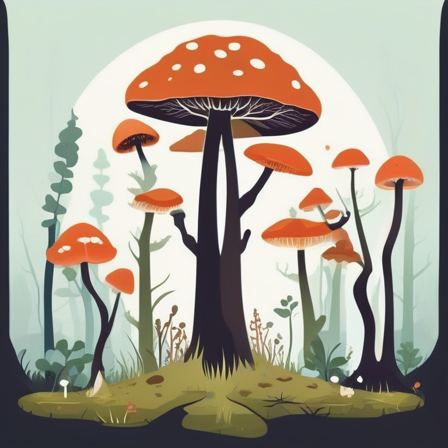
Decomposers are the crew that finish the job. Fungi and bacteria take dead bodies and fallen leaves apart into raw chemicals. Without them, dead wood would pile up for ever and the whole system would run out of building materials within a few decades.
Nutrients back to the soil
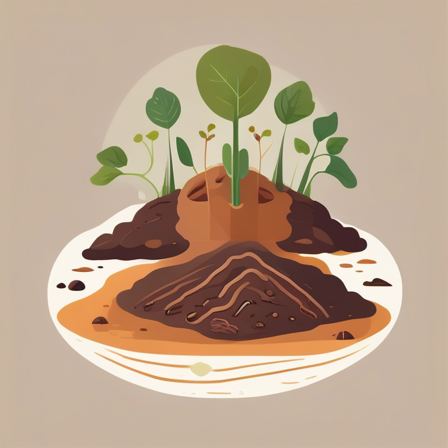
Now the nutrients travel back to the beginning. Nitrogen, phosphorus and carbon soak into the soil and a root pulls them up again. Every atom in your body has already been through countless plants and animals before it ever got round to being you.
Only a tenth moves up
Here is the rule that shapes everything above it. Only about a tenth of the energy at one level reaches the next. The other nine tenths leave as body heat, as movement, and as the parts nobody eats, like bones, bark and beetle shells.
The energy pyramid
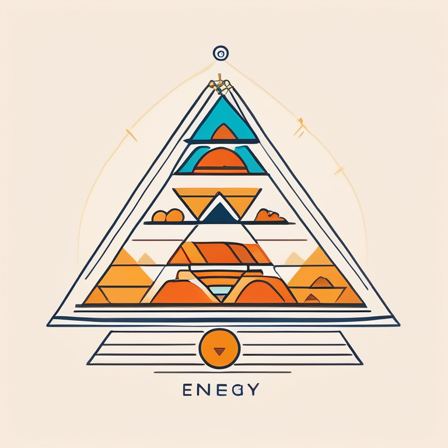
That tenth is why a food chain is shaped like a pyramid. It takes roughly ten thousand kilograms of grass to make a thousand kilograms of grasshoppers, to make a hundred kilograms of frogs, to make ten kilograms of snakes, to make one single hawk.
A food web, not a chain
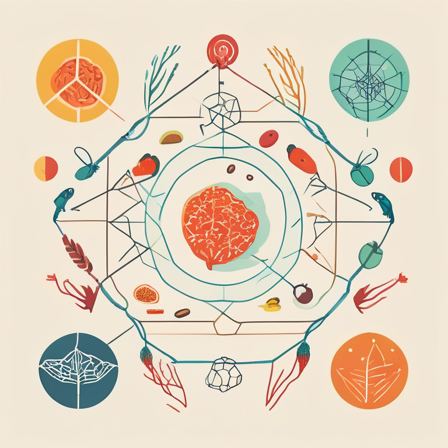
A real meadow is not a chain at all, it is a web. Hundreds of feeding links run at once, and one fox can sit on three different levels in a single day depending on whether it caught a beetle, a rabbit or a young bird.
Keystone species
Pull out one strand and the whole web shivers. When wolves returned to Yellowstone, the elk stopped loitering by the rivers, willows grew back, beavers moved in and the riverbanks themselves stopped crumbling. An animal that important is called a keystone species.
You are in the web too
You are inside this web, not watching it from outside. Every meal you eat traces back through a few links to a plant and then to sunlight, and because so much energy is lost at each step, eating lower down feeds far more people from the same field.
Watch it explain itself
Every step above is narrated aloud. Play it, or open it in the editor and make it yours — no account needed.